President Lai's New Year Address Keeps Inflaming Political Divisions
United Daily News Editorial, January 2, 2026
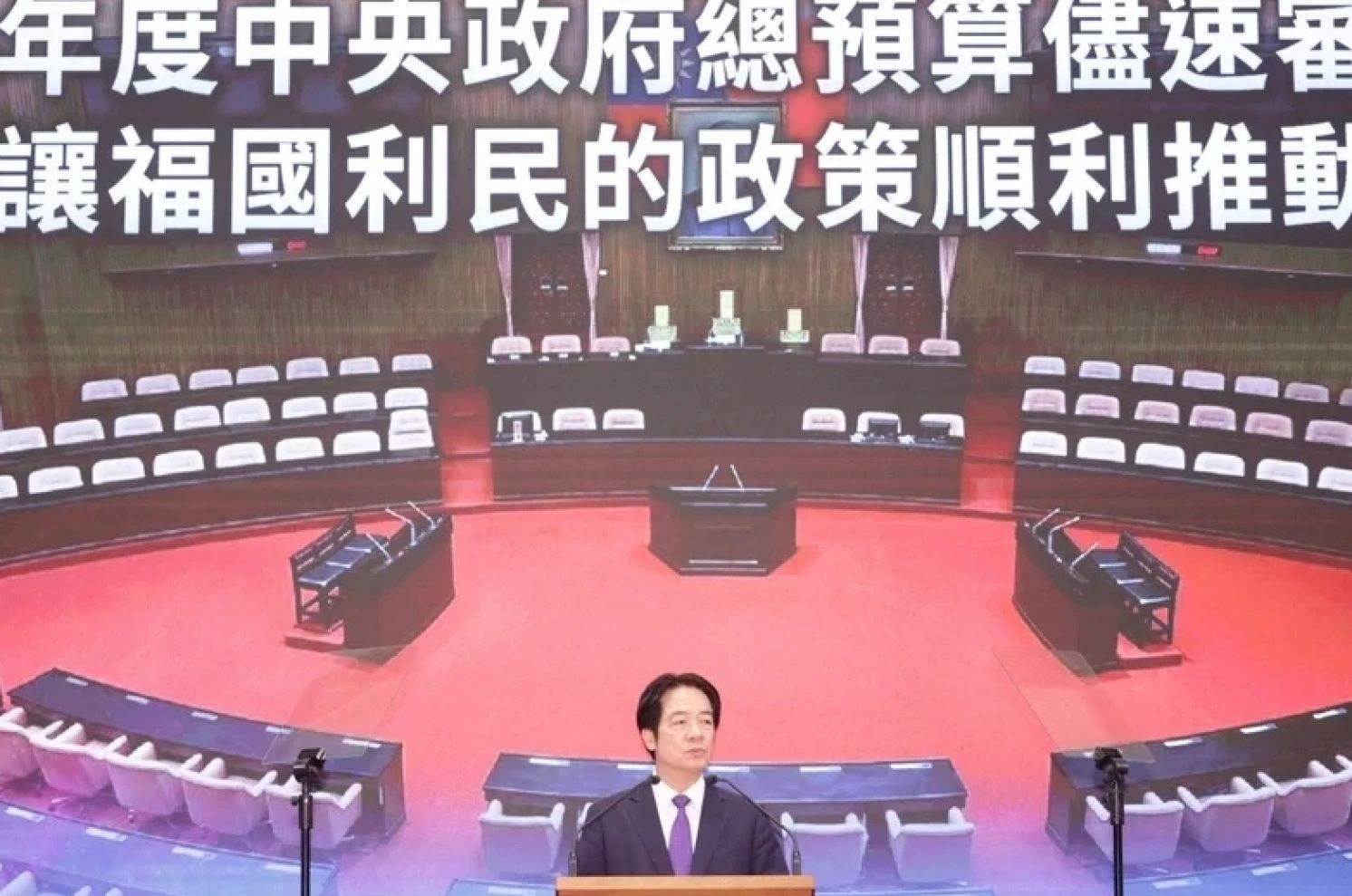
In his New Year’s Day address, President Lai Ching-te laid out four overarching goals, including “building a safer and more resilient Taiwan” and “fostering a democratically united Taiwan.” Yet when asked whether he would go to the Legislative Yuan to explain himself in response to impeachment motions proposed by the opposition Kuomintang (KMT) and Taiwan People’s Party (TPP), he dismissively said the legislature was “wasting time,” and told the opposition that it “should start taking care of some real business.” Little does he realize that the one who should start taking care of real business is President Lai himself.
In his address last year, in response to the then-ongoing “mass recall” petition movement, President Lai put forward the fallacy of “greater democracy,” claiming that when the Legislative Yuan passes controversial bills, not only can the Executive Yuan seek reconsideration, but constitutional bodies can also petition for constitutional interpretation; moreover, the people possess the rights of election, recall, initiative, and referendum, allowing them to “gather greater democratic power” and demonstrate popular sovereignty. This declaration plunged Taiwan into comprehensive political and social turmoil throughout the past year due to the mass recall movement. That “recall” became Taiwan’s representative character for 2025 was something President Lai had already written into place in the address last year.
The mass recall ultimately ended in a resounding failure of 32 to zero. All sectors hoped that President Lai and his Democratic Progressive Party (DPP) would learn their lesson, return to constitutional governance, and “start taking care of some real business.” Instead, the Lai administration doubled down: not only did various forms of administrative abuse of power fail to abate, but through unconstitutional and unlawful measures such as “refusing to countersign bills” and the “five-member Constitutional Court,” it expropriated legislative authority, smeared and vilified the opposition, and through repeated speeches and administrative actions escalated cross-strait confrontation. Taiwan has thus been drained by infighting, leaving its system of constitutional democracy battered and broken.
In the address this year, President Lai, aside from offering unoriginal self-praise for policy achievements, once again avoided addressing the massive failure of the recall movement, revealing not the slightest sense of reflection and an even greater lack of sincerity toward bipartisan cooperation. He said that the true meaning of democracy lies in the fact that “even when there are differing opinions, everyone is willing to abide by the Constitution,” and that “if the constitutional system is not observed and a single power expands without limit, it is the people who suffer and the nation that is destroyed.” President Lai directed these accusations at the opposition parties, yet the one failing to abide by the Constitution and allowing a single power to expand without restraint is precisely the Lai administration itself.
This makes President Lai’s statement thanking the Constitutional Court for “upholding professionalism and moral courage and making decisions in line with the Constitution and the expectations of the people” particularly ironic. After the “five-member ruling,” opinion polls showed that the vast majority of the public did not trust the fairness of the Constitutional Court’s decision, nor did they agree that the Office of the President and Executive Yuan should decide for themselves whether to abide by the law. With a single stroke destroying the legitimacy foundations of both the executive and judicial branches, in what parallel world does President Lai see these unlawful and constitutionally destructive actions as “meeting the expectations of the people”?
What President Lai’s address reveals is his continued inability to face the reality of governing as a double minority. Under conditions of deep involvement in, or even domination of, political struggle, he simultaneously attempts, in his capacity as president, to issue commands to different political parties and proponents of differing political views—demanding that the Legislative Yuan swiftly schedule deliberations on the general budget and quickly pass the defense budget—while at the same time transforming himself into a party spokesperson, accusing the opposition of forcing through legislation with constitutional concerns and of obstructing and delaying bills that would benefit the nation and the people. In reality, President Lai is merely prolonging the front line of partisan confrontation.
This further renders President Lai’s message of a “resilient island, a light of hope” incongruous with reality. In particular, when he angrily rebuked the opposition for lacking a two-thirds majority and said that proposing impeachment motions was a “waste of time,” did it ever occur to him that the DPP itself does not hold a majority, and thus has no qualification to demand that the parliamentary majority accept the Lai administration’s demands without question? Was launching the mass recall not even more of a “waste of time”? What President Lai demonstrates is not “resilience,” but “willfulness.”
President Lai has repeatedly emphasized his commitment to actively “promoting bipartisan cooperation,” yet the result has been ever more unbridled expansion of power and chaotic governance, alongside ever more intense partisan confrontation. Last year, he used “greater democracy” to push the mass recall; this year, he has used the Constitutional Court’s “five-member ruling” and the opposition’s “start taking care of real business” to humiliate the legislature. President Lai has repeatedly issued what amount to “declarations of war” against the opposition.
President Lai says that the public hopes “the deadlock of 2025 will not continue into 2026,” and this is indeed true. But the one who will cause the 2025 deadlock to persist into 2026 is precisely President Lai himself. As long as President Lai continues to “avoid taking care of real business,” using the stimulation of partisan confrontation and cross-strait collision as the core tone of his governance, 2026 will still be marked by turmoil both domestically and externally. The Lai administration’s continued lack of tangible achievements will likewise come as no surprise. Letting go of his obsession with power, facing political reality squarely, and governing in accordance with the law and the Constitution—these are the “real business” of which President Lai ought to take care.
From: https://udn.com/news/story/7338/9239800?from=udn-catebreaknews_ch2